Your loan could be just a few steps away!
Bad Credit? We Could Help. Quick Approval Process
Most employed person know the sinking feeling that comes with an unexpected cost arriving days before payday. Even employees with stable income can run into cash flow problems. If you’re wondering what is a payroll advance, some employers offer this option to help employees access part of their wages early. These expenses may include car repairs, medical bills, utility payments, emergency travel, and other unexpected costs.
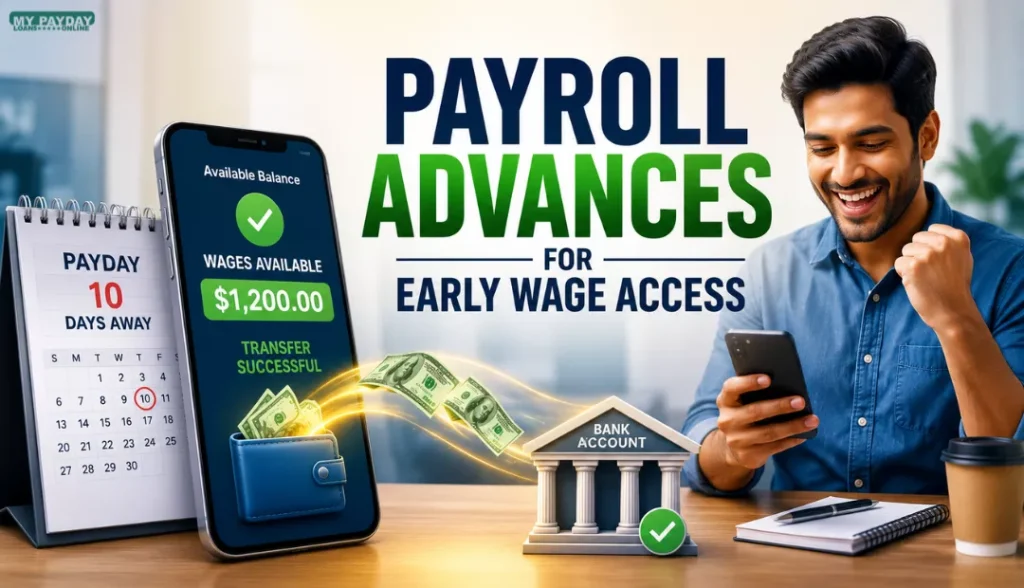
A payroll advance is when an employer pays a portion of an employee’s upcoming income before payday, which the employee then repays through deductions from future paychecks.
Payroll advances are primarily employer-provided benefits and are not like payday loans or other short-term lending options. They are typically easy to get, and do not involve credit checks or high interest rates. This guide will introduce you to payroll advances (what they are, how they function, who is eligible, their pros and cons) and present some other options for employees to get access to cash before they receive their payroll.
A Closer Look at Payroll Advances
A payroll advance (often referred to as a paycheck advance) is a benefit employers extend to employees when the employers provide employees with pay before the employees’ scheduled payday. Unlike traditional loans that employees obtain from banks, credit unions, or other lending resources, payroll advances are employer-provided.
Payroll advance characteristics include:
- Direct employer funding
- Employee already earned a part of the wages in advanced
- Payroll deductions for repayment
- Short-term arrangement
- Credit checks generally not required
These features often lead people to believe payroll advance and payday loans are the same. Unlike payroll advances, payday loans are provided by a third-party lender and can feature exorbitantly high APR and fees. Payroll advances, by contrast, are usually designed as an employee benefit or workplace accommodation.
Payroll advance interest is not charged by many companies, but policies across different companies and jurisdictions can be completely different.
How Does a Payroll Advance Work?
The process of advancing payroll differs from company to company, however, the majority of organizations will have a standardized process to capture the advance and ensure the repayment.
Employee Request
The process begins when an employee approaches the HR department, or the payroll team, or their manager to request an advance paycheck. The employee generally states the amount needed and the reason for the request. The company may also request documentation of a financial hardship or emergency.
Employer Review
The employer will examine the request based on their internal guidelines. This may include the employee’s current payroll status, their length of service, previous requests for an advance, their ability to repay the advance, and any other factors that are defined in the organization’s payroll advance policy.
Approval and Documentation
When the employer approves the request, the employee must sign a payroll advance agreement. This agreement will include:
- The amount being advance
- Schedule for repayment
- The amount to be deducted from payroll for each scheduled repayment
- Dates of repayment
- Employee authorization for deductions
Written documentation ensures each party is made aware of their obligations and serves as a compliance aid for the payroll department.
Funds Are Disbursed
The employer will disburse the advanced funds once the request has been approved. Depends on the organization’s payroll system, the advance may be issued via direct deposit, a paper check, or other payment methods.
Repayment Through Payroll Deductions
Payroll advances are repaid through deductions from future payroll. Some employers will repay the advance in full through the next scheduled payroll, while others will repay the advance over multiple pay periods to lessen the financial burden on the employee.
Payroll Advance vs. Paycheck Loan vs. Earned Wage Access
Many will use these terms interchangeably, however, they refer to different financial products.
| Feature | Payroll Advance | Paycheck Loan | Earned Wage Access |
| Source of Funds | Employer | Third-party lender | Wages already earned |
| Credit Check | Usually no | Often yes | Usually no |
| Interest Charges | Usually none | Often charged | Fees may apply |
| Repayment Method | Payroll deductions | Loan payments | Deducted on payday |
| Based on Earned Wages | Sometimes | No | No |
Payroll advances are seen as safer than paycheck loans since there are no high-interest rates involved. Earned Wage Access (EWA) allows workers to cash out earned money, rather than money that has not yet earned.
Who Is Eligible for a Payroll Advance?
Unlike paycheck loans, eligibility for a payroll advance determined by the employer. Each company follows its own policies on eligibility, how/if requests approved, and any limits.
Some common eligibility guidelines are:
- Staying employed for 60 to 90 days
- Employed for full-time or part-time
- Having a good relationship with the company
- Not having open disciplinary issues
- Having a financial need or an emergency
- Following the guidelines for a previous payroll advance
Companies also tend to limit how many advances permitted in a year. An employee may be allowed to request one or two payroll advances in a year, or a payroll advance may be limited to a certain amount based on the employee’s earnings.
If employees want to know if payroll advances allowed in their company, they can consult the employee manual or inquire with HR.
Pros and Cons of Payroll Advances
Pros:
No Interest in Most Cases
Most payroll advances do not charge interests, making them good solution when fund needed.
No Credit Check Needed
Employees can usually bypass the credit check process because employment and company policy tend to provide most of the details for approval. For this reason, the request for an advance usually does not result in a change in credit score.
Quick Cash
Advances provide a speed advantage in getting cash, for employees, compared to a traditional loan option.
Less Risk than a Payday Loan
An advance provides an alternative to a payday loan, short-term debt, or a loan with high fees.
Good for the Employee
Implementing payroll advances can create a more satisfied workforce, can contribute to a positive work environment, and aid in employee retention for the employer.
Cons:
Smaller Future Paychecks
An advance results in a deduction from an employee’s take home pay, and this can result in more budgeting problems.
Financial Distress
While a salary advance help in a particular financial distress situation, but if repeatedly used on regular basis leads to an never ending cycle. Making the borrower getting into more financial problems.
Administrative Burden
There is an extra workload for the employer in tracking requests and deals, setting the advance deductions, and remaining compliant with the laws concerning payroll and wages.
Not Universally Available
Many companies do not give advance payroll, so employees do not have a choice for immediate funding.
Alternatives to a Payroll Advance
While there are financial options available, they may not all be extremely favorable or accessible, depending on the financial distress situation.
EWA Apps
DailyPay, Payactiv, and Even are services that allow employees to access part of their earned wages before their scheduled pay day. More employers are choosing to use this service.
Employee Assistance Programs (EAPs)
Some Employee Assistance Programs provide aid with access to emergency financial assistance, grants, low-cost loans, or financial counseling.
Credit Union Personal Loans
Compared to other lenders, credit unions typically have personal loans that have lower interest rates and cheaper repayment terms.
401(k) Loans or Hardship Withdrawals
Some retirement plans allow loans and hardship withdrawals, but these options can reduce long-term retirement savings. It is also important to consider any potential tax implications before making a decision.
Community Assistance Programs
Emergency help with housing, utilities, food, and medical expenses may be available through local government organizations, charities, and non-profit and faith-based organizations.
Buy Now Pay Later Programs
Buy Now Pay Later services allow consumers the ability to make specific purchases and then pay for them in multiple installments. These services do not offer uses for general-purpose cash.
Conclusion
If an employee faces an unexpected financial emergency that will last until the next scheduled payday, a payroll advance may be a suitable option. Since a payroll advance repaid through a paycheck makes them less costly and carries less risk than payday loans and other forms of expensive short-term financing.
Payroll advances typically do not require a credit check and generally do not affect credit scores, which many employees view as a key benefit. However, employees should also understand that repaying the advance reduces their future take-home pay.