Compare $5,000 Personal Loan Rates and Options
Your loan could be just a few steps away!
Bad Credit? We Could Help. Quick Approval Process
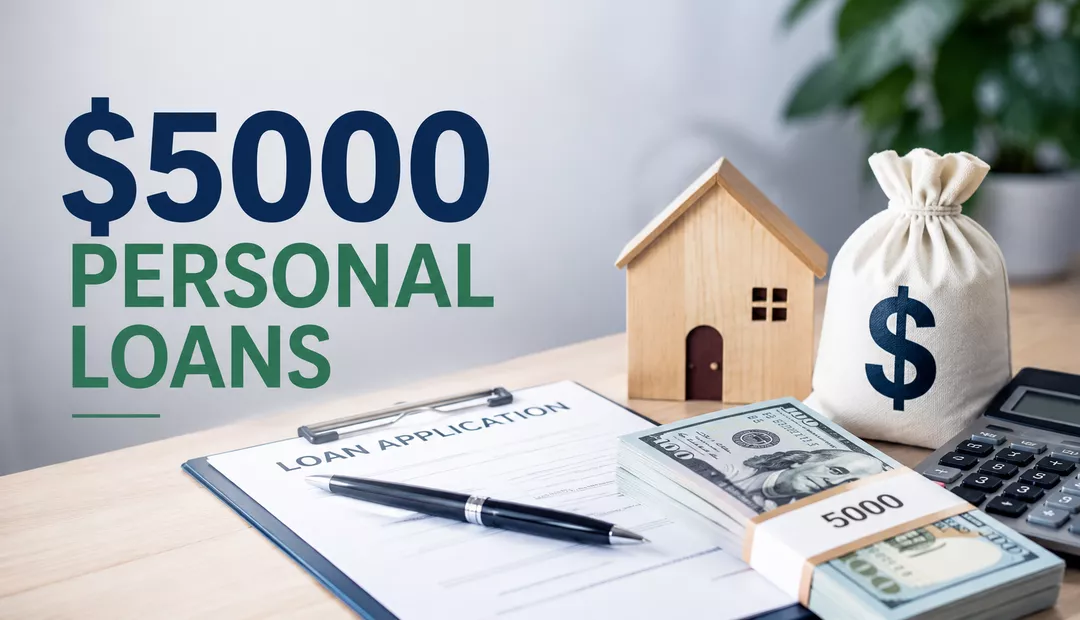
A $5,000 personal loan is an installment loan that provides a lump sum that you repay through fixed monthly payments over an agreed repayment period. Since most personal loans are unsecured, qualifying doesn’t typically require providing collateral such as a vehicle or home. Borrowers often use $5,000 loans to consolidate debt, cover unexpected medical bills, finance home repairs or moving expenses. Otherwise it will be difficult to finance upfront and manage other large expenses that come their way.
Your options for obtaining a $5,000 personal loan include banks, credit unions and online lenders. Traditional financial institutions usually provide competitive rates to existing customers while online lenders generally have faster application processes. Many online lenders even allow you to check your rate without impacting your credit score – some even offering same-day approval or funding. Actual funding times depend on which lender is chosen as well as when your application is finalized by banks and online lenders.
Eligibility requirements vary between lenders. Understanding what influences your Annual Percentage Rate (APR) helps you compare offers more accurately and choose one that fits your needs and budget.
What Is the Average APR for a $5,000 Personal Loan?
An Annual Percentage Rate (APR) on a $5,000 personal loan varies widely depending on both your lender and financial profile. Most personal loan providers offer APRs ranging from single digits for highly qualified borrowers up to 36% for those with poorer credit histories; although interest rate represents the cost of borrowing directly, APR provides more accurate cost comparison.
Personal loans are priced based on risk. Two people applying for the same $5,000 loan could receive completely different offers depending on factors like creditworthiness, income and existing debt burden; even lenders that advertise similar rates could evaluate each application differently, making comparison more worthwhile.
Credit
Your credit history is one of the first factors lenders consider when reviewing a $5,000 personal loan application. A strong profile demonstrates your history of responsibly handling borrowed money, which reduces lenders’ risk. Borrowers with higher scores often qualify for lower APRs and more favorable repayment terms.
However, lenders do not rely solely on your credit score when considering your application; they also review other factors related to it such as payment history, utilization rates and any recent delinquencies or collections. A moderate credit score with consistent on-time payments may receive stronger offers than one with similar credentials but who have recently missed payments.
Debt-to-Income (DTI) Ratio
Your debt-to-income ratio (DTI), commonly referred to as your DTI, measures how much of your monthly income already goes toward debt payments. Lenders use this calculation to assess whether taking on additional obligations fits comfortably within your existing budget.
Example: if your gross monthly earnings before taxes are subtracted are $5,000 and $2,000 of that is allocated towards existing loan payments, credit cards, and other debts; your DTI would be 40%. A lower ratio usually indicates more disposable income available to handle additional loan payments.
Even those with excellent credit scores may receive less favorable loan terms if they carry significant debt.
Employment and Income
Lenders need assurances that you can make consistent monthly payments throughout your loan term, with sufficient earnings to meet both current financial obligations as well as your loan payments. While each lender has individual requirements regarding income requirements, most seek evidence that sufficient earnings exist for both yourself and any proposed loans payments.
Income verification doesn’t always involve traditional full-time employment; many lenders accept multiple sources of regular income like self-employment earnings, retirement benefits, disability income, military benefits or rental income as proof of your ability to repay. What matters most is being able to demonstrate consistent cash flow and repayment capacity.
Secured vs. Unsecured Loan
Most $5,000 personal loans are unsecured, meaning you don’t need collateral in order to borrow the money. Instead, lenders make their decision based on your creditworthiness, income and overall financial profile – no assets or guarantees backing this type of financing means slightly higher interest rates compared with secured borrowing for applicants with comparable qualifications.
An unsecured personal loan is often the preferred choice for borrowers who want to protect valuable assets if their financial circumstances change unexpectedly. Furthermore, its application process tends to be quicker since no collateral needs to be valued or verified prior to funding.
Secured personal loans require you to pledge an eligible asset as collateral; depending on the lender, this could include anything from savings accounts or certificates of deposit to vehicles and other qualifying properties. By mitigating risk for lenders, secured loans often offer reduced interest rates or approval easier for borrowers with less established credit profiles.
Loan Term
Your loan term selection has an immediate impact on both your monthly payment and overall cost of borrowing. Personal loan repayment periods generally range between two and seven years; some lenders offer shorter or longer repayment options.
Shorter repayment periods tend to result in higher monthly payments as you’ll spread out repayment of the borrowed amount over less months. However, they typically result in less interest overall since less of your balance remains outstanding for such an extended period of time.
By choosing a longer loan term, your monthly payments may decrease while spreading them over additional months – this makes your budget more manageable; however, it often increases total interest paid over its lifecycle.
State Regulations
Your place of residence influences the types of personal loans available, the maximum interest rates lenders charge, and the lending practices that apply. Each state establishes consumer lending regulations which lenders must abide by when offering financial products to residents in that state.
Personal Loans Or Credit Cards
Both personal loans and credit cards allow you to borrow money, but in very different ways. Which option best meets your borrowing needs depends on factors like amount needed, repayment speed and nature of expense covered. Personal loans often offer more structure and predictability when used to cover large expenses like $5,000 one-off purchases than revolving lines of credit.
Personal loans provide an upfront lump sum, which you repay through equal monthly installments over a set term at a fixed interest rate. Your monthly payment stays the same throughout your loan term allowing for easier budgeting as you know exactly when your debt will be cleared away.
Can You Get a $5,000 Loan Without a Cosigner?
Yes, many borrowers can secure a $5,000 personal loan without needing a cosigner. Banks, credit unions and online lenders regularly approve applications based solely on applicant financial profiles.You may not need another individual supporting your application.
Cosigners are individuals who agree to become legally responsible for your loan if you cannot make payments as agreed upon with the lender. This reduces the lender’s risk and may improve your chances of approval or help you qualify for a low interest personal loan, depending on your credit profile and the lender’s eligibility criteria. Not every lender offers or permits cosigned loans.
Get $5,000 with Bad Credit from Payday and Title Lenders
Even having poor credit doesn’t stop you from borrowing $5,000. While traditional banks may impose stricter lending standards, online lenders usually evaluate applications using more comprehensive criteria; such as stable income and employment history as well as your overall ability to repay the loan may help strengthen your application even if your credit score is less-than-ideal.
Poor credit borrowers should expect higher borrowing costs, since lenders assume greater lending risks. Lenders usually offset this risk with higher APRs or shorter repayment terms – though comparing multiple lenders may help you identify more suitable offers that suit your financial circumstances.
Mypaydayloansonline offers an easy way to explore bad credit loan options: connecting you with participating lenders and financial service providers through one online application form. Free to use, this service enables you to compare available options without visiting multiple lender websites individually.
Where to Find Reputable Lenders
Finding the right lender is just as important as qualifying for the loan itself. While many companies advertise quick approval and guaranteed financing, borrowers should focus on lenders that clearly explain loan terms, fees, repayment schedules, before asking them to sign an agreement.
Banks and credit unions remain popular choices for borrowers with established credit, as they often provide competitive interest rates and personalized customer service. Existing customers may even take advantage of discounts or simplified application processes as an added perk of doing business with them.
Mypaydayloansonline offers another convenient solution by connecting borrowers to participating lenders through one application process. Instead of filling out multiple forms across multiple websites, applicants simply submit their data once and review available loan opportunities from lenders within their network.
How to Qualify for a $5,000 Loan
- Every lender has different approval criteria for applying for a $5,000 loan application, but most evaluate similar financial information when reviewing an application. Knowing these requirements in advance will enable you to prepare the necessary documentation and streamline the application process.
- Applicants typically need to verify their identity, meet any minimum age requirements in their state, and present proof of legal residency or citizenship, when applicable. Lenders often request contact details, a valid checking account number, and documentation showing regular income sources as additional criteria for approval.
- Income verification helps demonstrate your ability to pay back the loan. Depending on your lender, this could include recent pay stubs, bank statements, tax returns or any other financial records.
- Self-employed borrowers or those with multiple sources of income may require additional documentation in order to demonstrate consistent earnings.
How to Improve Your Chances of Qualifying With Bad Credit
Although you may not improve your credit history overnight, you can take steps before applying for a loan to strengthen your financial profile and become a stronger loan applicant. Even small improvements to your overall financial profile may make an impactful statement about who you are as a borrower to lenders evaluating borrowing risk.
One of the most effective strategies is reducing existing debt, particularly credit card balances. Lower balances improve your debt-to-income ratio and may also lower credit utilization levels; both can help strengthen your financial profile.
Before applying, reviewing your credit report is another valuable step.
Next Step After Qualifying
Once your application is accepted, lenders will provide a loan agreement outlining your amount borrowed, APR, repayment term, monthly payment amount and any applicable fees. Before accepting this offer, carefully read over each section so you understand all your repayment obligations as well as total costs involved with borrowing.