Your loan could be just a few steps away!
Bad Credit? We Could Help. Quick Approval Process
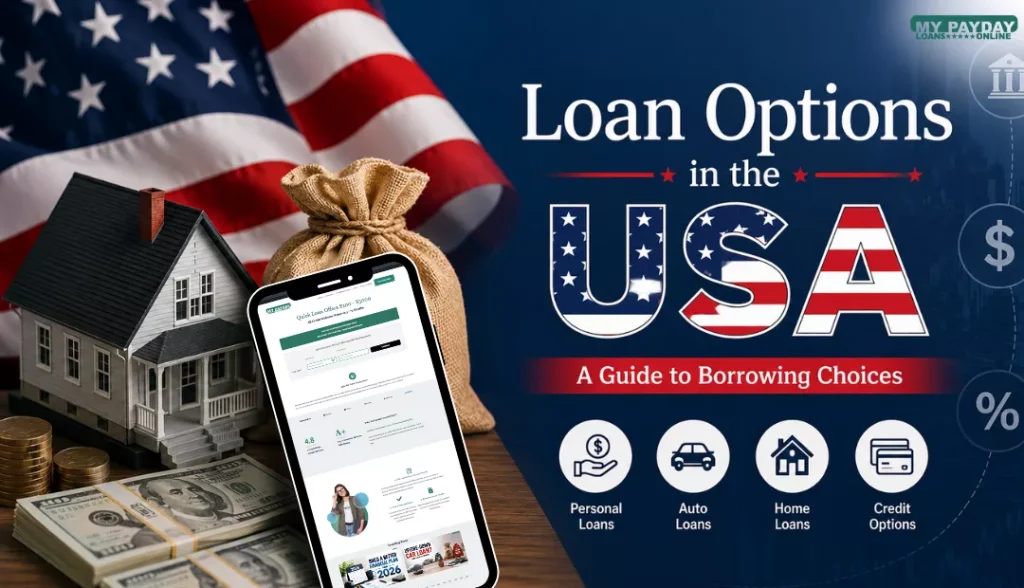
When seeking to borrow money, selecting the most appropriate loan depends on more than just its total amount. Loan options in the USA differ based on purpose, eligibility requirements, repayment structure, interest rates and loan amounts. Personal loans, installment loans, payday loans, cash advances, auto loans, mortgages, student loans, and business financing all serve different financial needs.
Loans generally fall into several broad categories. Consumer loans help individuals pay personal expenses, while business financing provides the means for operations, expansion, equipment or working capital needs. Loans can also be secured, meaning they require collateral, or unsecured, meaning the borrower does not pledge an asset as security. Even within the same category, lenders can offer different terms and eligibility requirements.
Before applying for loans, comparing options can help you understand which best meets your financial needs, the repayment cost and any requirements to meet. The Consumer Financial Protection Bureau suggests doing this since different loans may impact borrowing costs, payments and available borrowing amounts.
Common Loan Options Available in the USA
The U.S. lending market offers many loan products tailored for different purposes. Some common loan choices are:
Personal loans: General-purpose financing that can be used for expenses like major purchases, home improvement projects and debt consolidation.
Installment loans: Loans that must be repaid over an agreed-upon term through multiple scheduled payments.
Payday loans: Short-term consumer financing that requires repayment on or around the borrower’s next payday, subject to state laws.
Cash advances: An umbrella term used to refer to cash advance apps and certain short-term financing products such as payday loans.
Credit card cash advances: Cash taken out against an available credit card limit, subject to separate fees and interest terms.
Secured loans: Loans secured against tangible collateral such as vehicles, homes or other qualifying assets that serve as security.
Lines of Credit (LOCs): Revolving access to funds within a predetermined credit limit, allowing borrowers to access funds as needed.
Auto Loans (ALs): Financing designed specifically to buy either new or pre-owned automobiles.
Home Loans (HLs): Loans used to purchase, refinance, or gain equity access to real property.
Student Loans: Loans that cover eligible education-related costs.
Small Business Loans: Financing designed specifically to cover business expenses like working capital, equipment purchases and expansion needs as well as other operating needs.
The ideal option will depend on various criteria, including your purpose for borrowing, amount required, credit profile, income source, repayment capacity and collateral availability.
Personal Loans
Personal loans provide the borrower with a set amount of money in one lump sum that they repay according to the terms of their loan agreement. These generally offer fixed interest rates and monthly repayment schedules that make payments predictable; U.S. Bank, for instance, describes personal loans as one-time funding that may help with major expenses or debt consolidation.
Secured vs. Unsecured Loans
Personal loans come in both secured and unsecured varieties, the latter of which does not require collateral pledged by borrowers as security for borrowing. On the other hand, secured personal loans require collateral to secure the borrowing, which may affect the lender’s risk assessment and the terms offered.
Installment Loans
An installment loan provides the borrower with a set amount, which they repay through scheduled payments over time. Each payment typically applies towards principal and any applicable interest or finance charges as per the loan agreement.
Installment loans provide consumers with much-needed funding for personal expenses, vehicle purchases, home improvements and unexpected costs.
Payday Loans
Payday loans are short-term consumer financing solutions typically intended for borrowers in need of immediate funds for expenses that arise soon. They can be obtained either at storefront locations or through online applications, depending on your state of residence and lender preferences.
Cash Advance Options
Credit Card Cash Advances
A credit card cash advance enables cardholders to withdraw cash against their available credit and has its own separate interest rate from regular purchases. Some financial institutions also charge ATM or transaction fees as part of this transaction.
Cash Advance Apps
Cash advance apps may provide eligible users with access to part of their expected income prior to payday. Eligibility requirements, advance limits, fees and repayment arrangements vary between providers.
Payday-Style Cash Advances
Short-term consumer financing products known as cash advances may also be known by this name, though their terms can differ depending on both their lender and state regulations.
Since “cash advance” refers to multiple products, borrowers should compare total costs, fees, repayment requirements, eligibility criteria and funding processes before making their selections.
Short-Term vs. Long-Term Loan Options
Loan options can also be evaluated based on how quickly they’re anticipated to be repaid.
Short-term financing often addresses immediate or near-term needs, while longer-term options can accommodate larger purchases or expenses that require multiple installments of payments over time.
The purpose of your borrowing often determines which category is appropriate; an unexpected expense might require different financing than purchasing a vehicle, a home, or expanding business operations.
Consider more than the payment amount when comparing options; take into account details such as the number and size of payments, interest or finance charges, fees and total amount repaid. A lower individual payment does not necessarily translate to lower overall costs – according to the Consumer Financial Protection Bureau, loan terms can have an effect both on monthly payments and total interest paid over the term.
Online Loan Options in the USA
Online lending has revolutionized the borrowing experience. Depending on the lender, applicants may complete applications, provide financial data and verify identity and income before reviewing loan offers, signing agreements digitally and receiving funds without ever visiting physical branches.
An online loan application may request information such as:
- Name and contact details
- Employment and income information
- Bank account information
- Social Security number or other identification information
- Requested loan amount
- Housing and financial information
Banks, Credit Unions, Online Lenders, and Loan Connection Platforms
Borrowers can find loan solutions through various financial providers and platforms.
Banks
Banks offer an assortment of financial products, including personal loans, auto loans, mortgages, credit cards and lines of credit. Current customers may already have established relationships with the bank, while eligibility requirements may differ depending on which product(s).
Traditional banks evaluate factors such as credit history, income, existing debt, assets and any other pertinent financial data to provide loans or assess applications for new accounts.
Credit Unions
Credit unions are member-based financial institutions and borrowers must meet membership requirements before accessing products available within them.
Additionally, credit unions may provide consumer loans, auto financing and personal loans. Along with membership structures and product eligibility that differ from those of traditional banks.
Online Lenders
Many or all of the application process with online lenders takes place entirely online. Applicants may submit information, complete identity verification and even receive loan decisions or offers without visiting a branch office.
Online lenders tend to have more flexible eligibility requirements than banks or credit unions, making them suitable for people of various credit profiles and circumstances.
Loan Connection Platforms
A loan connection platform differs from direct lenders; they do not provide loans directly, they collect information from applicants and use that data to match them with participating lenders that could potentially offer suitable financing.
The participating lender, rather than the connection platform, determines whether to approve the application and sets the applicable loan terms.
Explore Loan Options With My Payday Loans Online
My Payday Loans Online provides a free loan connection platform where applicants can submit an online application and explore potential loan options. Our platform uses information provided by applicants to match them with participating lenders based on their needs and financial profile. While My Payday Loans Online doesn’t directly make loans or approve applicants, participating lenders review applications independently before deciding if an applicant should be approved and what loan terms to offer them.