Your loan could be just a few steps away!
Bad Credit? We Could Help. Quick Approval Process
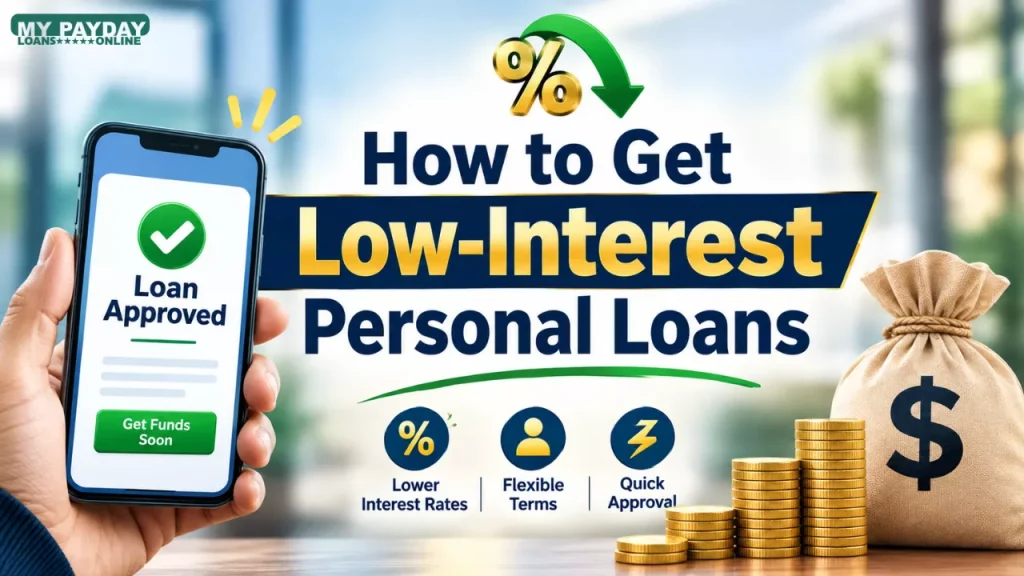
Low-interest personal loans make borrowing more affordable by reducing interest over time. Your interest rate depends on several factors, including your credit profile, income level, debt-to-income ratio, requested loan amount and repayment term. Lenders may also have different eligibility criteria and loan terms, so comparing offers can help you find an option tailored to your financial situation.
What Is a Low-Interest Personal Loan?
Low-interest personal loans are personal loans that offer interest rates lower than the average market rate or those available on comparable personal loan offers. No single interest rate qualifies as “low” because rates change over time and lenders evaluate applicants differently.
An individual with strong credit, regular income and manageable debt may qualify for lower rates than someone with bad credit, limited credit or higher existing debt. Some lenders may also offer different pricing depending on the loan amount, repayment term or whether the loan includes collateral.
Types of Personal Loans
Personal loans generally fall into two broad categories: secured and unsecured loans. The primary difference lies in whether an asset serves as collateral.
Secured Personal Loans
A secured personal loan requires collateral as security against repayment. If you fail to meet its terms, the lender may seize the asset to recover the outstanding debt.
Collateral can include assets such as:
- A vehicle
- A savings account or certificate of deposit
- Other eligible personal property
- Certain financial assets accepted by the lender
Secured personal loans often feature more favorable borrowing terms than unsecured loans because collateral reduces lenders’ risk.
Unsecured Personal Loans
An unsecured personal loan does not require you to put up collateral; rather, lenders consider factors such as your credit history, income, debt obligations, and other financial information when determining eligibility and loan terms.
As there is no collateral available to recover if payments are not made on time, unsecured loans often carry higher rates than comparable secured loans for borrowers with weaker credit profiles. On the other hand, no specific asset needs to be put at risk as collateral.
11 Chances of Getting a Low-Interest Personal Loan
Finding the most competitive rate may not always be possible, but taking certain steps may increase your odds of finding more attractive offers.
1. Check Your Credit Before Applying
Start by reviewing your credit reports and scores. Your past borrowing habits provide lenders with insight into how well you have managed borrowing and repayments, while your score can influence which interest rates may apply to you.
Check your reports carefully for inaccurate, outdated, or unfamiliar information that could adversely affect your credit profile and loan offers. If you find an error, follow the appropriate dispute process to have it investigated and reviewed.
Knowing your credit status before applying can also help set realistic expectations. Borrowers with stronger credit profiles can access more competitive personal loan rates.
2. Evaluate Rates From Multiple Lenders
Do not assume the first personal loan offer you receive will have the lowest rates or costs; rates and loan terms can differ significantly across lenders.
Compare offers from multiple lenders, such as banks, credit unions and online loan providers. When possible, utilize prequalification options to review estimated offers before submitting a loan application. Some lenders use soft credit inquiries during prequalification, which typically do not adversely affect your credit score.
Compare more than just the advertised starting rate when considering loans. Compare the APR, origination fees and other applicable charges, as well as the monthly payment and total amount you owe. A higher interest rate could still result in a lower total cost if the loan has fewer fees attached to it.
3. Determine an Appropriate Loan Amount
Consider borrowing only what is essential. Your lender may take loan size into account when evaluating risk and pricing your offer.
Before applying, calculate how much funding is necessary for your intended purpose and try not to add extra funds just because a lender offers higher borrowing limits.
Avoid focusing exclusively on monthly payments. Extending the repayment period can make payments appear more affordable while increasing interest charges over time. Instead, compare both total repayment costs and monthly payments when making your decision.
4. Consider Reducing Repayment Period
Your repayment period can have a dramatic effect on the total cost of a personal loan. A shorter repayment term means faster repayment of the balance and less interest accumulation over time.
Shorter-term loans may offer lower interest rates; however, the trade-off is a higher monthly payment.
For example, you might pay less total interest with a three-year loan than with one that extends over five years; however, the latter option may have lower monthly payments.
Choose a repayment period that balances total interest with monthly payments you can comfortably manage, rather than opting for the shortest term if it puts undue strain on your finances.
5. Improve Your Debt-to-Income Ratio
Your debt-to-income ratio, or DTI, compares your monthly debt obligations with your gross monthly income. Lenders use this ratio to assess how much of your earnings go toward debt payments.
Lower debt-to-income (DTI) ratios indicate more available income for loan payments, while high DTI ratios could make qualifying for favorable terms more challenging, since adding another payment could put undue strain on your finances.
You can improve your DTI by paying down existing debt, limiting new borrowing needs and increasing qualifying income when possible. Even just paying down existing monthly debt obligations will help improve this ratio prior to applying.
6. Demonstrate Consistent Income
Lenders often assess income to evaluate whether there are enough resources to cover loan repayment. An ongoing source of funds can demonstrate that you have enough financial resources to manage loan payments.
According to your lender’s requirements, qualifying income could come from employment, self-employment or other acceptable sources. You may need to provide documentation or provide information demonstrating proof of income in order to qualify.
Applicants with a strong financial profile may stand out, particularly those with manageable debt and a strong credit history.
7. Consider Secured Personal Loans
If you own an eligible asset that can serve as collateral, a secured personal loan might be worth considering. With this type of loan, your asset provides extra security to the lender.
Because collateral can reduce lenders’ risks if you default, secured loans may come with different pricing and terms than unsecured loans. The exact rates and terms depend on each lender and individual application.
Assets that may serve as collateral can include a vehicle, savings account, certificate of deposit or other eligible property, depending on your lender.
However, make sure that you assess the risk carefully. If you default on your loan agreement, lenders may have the right to repossess an asset used as security, and even lower interest rates may not justify placing important assets at unnecessary risk.
8. Submit Your Application With a Trustworthy Co-Signer
Co-signers agree to assume responsibility for loan repayment if the primary borrower cannot fulfill their obligation, potentially helping the borrower qualify for more favorable loan terms. A co-signer’s strong credit profile may also improve the chances of approval.
Co-signers may help improve your chances of qualifying or provide access to more favorable rates; however, not every lender allows co-signers.
Co-signing involves taking on significant financial responsibility. Missed payments could negatively affect both borrowers, and co-signers may need to make payments if the primary borrower cannot.
9. Strengthen Your Overall Financial Profile
Your loan application represents more than simply your credit score. Lenders will consider various aspects of your financial situation when deciding whether to approve your application and what terms they can offer you.
Before applying, ensure your financial information is accurate and up to date. Maintain regular banking activity, reduce outstanding debt wherever possible, and avoid making unnecessary new credit applications.
Reducing revolving debt, such as credit card debt, can also help improve credit utilization and strengthen your profile.
10. Search for Relationship-Based Loan Offers
Your existing relationship with a bank or credit union could provide access to loan products, discounts and offers designed for current customers and members.
Financial institutions may provide interest-rate discounts based on certain relationships or features, such as enrolling in automatic payments. Discounts vary, and eligibility requirements may apply.
11. Explore Online Personal Loan Options
Online personal loans make researching and applying for financing easier than ever, as digital applications enable you to provide information, verify identity and income, review potential offers and complete much of the process online.
Wrapping Up
Online platforms can make it easier to compare potential offers when multiple options are available. Prequalification allows you to review estimated rates and terms before deciding whether to submit a formal application.
Applying online doesn’t guarantee a lower interest rate, since online lenders still use eligibility criteria that vary based on factors such as credit profile, income, debt load, loan amount and repayment term.