How to Get a Loan With No Credit?
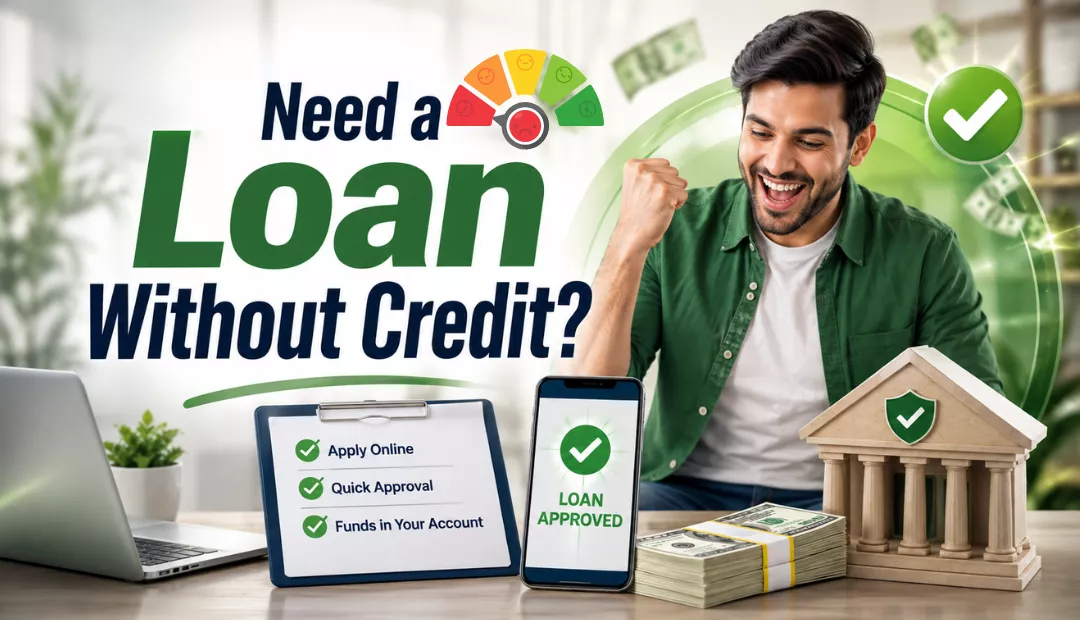
Your loan could be just a few steps away!
Bad Credit? We Could Help. Quick Approval Process
Finding traditional loans isn’t always straightforward, especially if your credit profile is poor or limited. Lenders usually review your report as part of their application process, making qualification harder or leading to higher borrowing costs.
No credit check loans are designed for those who may not qualify through conventional lending processes. Instead of solely considering credit history when considering loan applications, some lenders also take other factors such as income, employment status and banking activity into consideration. Making these loans suitable for people needing access to funds but having difficulty meeting standard lending requirements.
Borrowers often turn to no credit check loans when faced with unexpected expenses, emergency repairs, or short-term financial needs.
This guide provides an introduction to no credit check loans, their operation and eligibility criteria as well as common loan types available and typical costs and repayment terms.
What Is a No-Credit-Check Loan?
No-credit-check loans are a type of financing that does not rely on traditional hard credit inquiries to evaluate an application for financing. Instead of making their decision solely based on credit score considerations, some lenders take other factors such as income, employment status and bank account activity into consideration to evaluate your repayment ability for this loan.
Loans targeted towards those with poor or limited credit histories or no established profile are usually offered without conducting traditional credit checks. This makes approval more accessible for some applicants but doesn’t guarantee it – lenders still assess risk before approving loans.
As those with limited or poor credit are generally considered higher risks, no credit check loans often cost more than traditional personal loans. Interest rates, finance charges and fees may differ significantly depending on your lender, loan amount, repayment period and state regulations.
What Does It Mean to Have No Credit History?
Having no credit history means lenders have little or no information to evaluate, which differs from having bad credit. People with bad credit usually have a borrowing history that includes missed payments, high debt balances, or other negative factors. In contrast, someone with no credit history simply has not used enough credit for the major credit bureaus to build a meaningful credit profile.
You may have no credit history if you’ve never applied for credit cards, auto loans, mortgages or any other form. Young adults, recent graduates, recent immigrants or anyone who relies heavily on cash or debit cards typically fall under this category.
Lack of credit history makes it more difficult for lenders to predict your ability to repay loans, prompting some traditional lenders to request additional documentation or decline an application until more evidence of creditworthiness has been accumulated.
How Do No Credit Check Loans Work?
No-credit-check loans are designed for borrowers who may be disqualified by traditional underwriting due to limited or poor credit. Instead of conducting a hard credit inquiry, some lenders assess other financial information to decide if an applicant meets their lending requirements.
Like most loans, you borrow a specific amount and repay it according to the terms outlined in your loan agreement. Repayment may take the form of one lump sum payment or installments over multiple weeks or months depending on your type of loan agreement.
Unlike many traditional personal loans, some no-credit-check loans use finance charges instead of simple interest. Finance charges are fixed fees added onto the amount borrowed. Although their overall borrowing cost can increase considerably when expressed as annual percentage rate (APR).
Example: If you borrow $100 with a $15 finance charge and repay it within two weeks, the effective APR may be higher than implied by just paying this one fee alone because borrowing costs are calculated over such a short time frame.
Repayment terms vary based on your lender and loan product. Some require full repayment by your next payday while others offer installment payments over an extended period. Taking an accurate inventory of repayment schedules before borrowing can help determine if a loan meets your budget requirements.
Not every lender reports loan payments to the three nationwide consumer credit bureaus: Equifax®, Experian®, and TransUnion®. If your payments don’t make it onto these databases, successfully repaying a loan may not help build your credit history. Before applying, always inquire whether any payment activity will be reported back.
Loan Solutions with No Credit History
People without established credit histories have various borrowing options available to them, depending on your income, financial situation and ability to repay. You should consider factors like providing collateral or applying with someone who already has established credit profiles as factors when selecting the ideal borrowing solution for yourself.
Secured Personal Loans
A secured personal loan requires collateral in the form of savings account funds or certificates of deposit to reduce risk for lenders, making qualifying easier for those without substantial or extensive credit histories.
These secured loans often offer lower interest rates than their unsecured counterparts, although collateral may be at stake if payments aren’t met as agreed.
Cosigned Loans
Cosigned loans allow an applicant with stronger credit to apply with them, in exchange for taking on responsibility if you default. This reduces risk for lenders while improving your chances of approval.
Before seeking cosigners for a loan, keep in mind that both parties assume joint financial liability – missing payments may impose severe hardship on both borrowers, so it is wise to discuss expectations and repayment responsibilities beforehand.
Payday Alternative Loans
Payday Alternative Loans (PALs) are small-dollar loans offered by some federal credit unions to eligible members as a more cost-effective alternative to traditional payday loans, typically including lower fees, longer repayment terms, and fixed interest rates.
Membership requirements differ based on each credit union and not all institutions offer this loan program. If eligible, payday alternative loans could offer more affordable borrowing solutions than many short-term loans available elsewhere.
Payday Loans
Payday loans are short-term loans designed to be paid back on your next payday. Many payday lenders focus more on income than credit history when providing these loans, making them accessible even to borrowers with poor or limited credit histories.
While approval requirements may be less restrictive, they often come with steep finance charges and short repayment terms compared to traditional bank loans.
Car Title Loans
A title loan enables you to borrow money by using your vehicle as collateral. Loan amounts usually depend upon its value and allow you to continue driving your car while making payments depending on your lender’s requirements.
Due to your vehicle being collateral, failing to repay according to agreement may lead to repossession. Before choosing this type of financing, carefully review the repayment terms, fees, and potential consequences of missing or defaulting on your payments.
How to Get a Loan with No Credit
Even though qualification requirements vary among lenders, preparing in advance can simplify and expedite your application process as well as help you compare loan offers more easily.
Before applying, determine how much money you need. Borrowing more than necessary increases your repayment obligations and may lead to higher interest charges or fees.
Investigate your budget to estimate an affordable monthly payment amount. Selecting a loan amount tailored specifically to meet your financial needs could make repayment more efficient.
Prepare Your Documents
Most lenders require documents that verify both your identity and financial situation before reviewing an application for loan consideration.
Depending on the lender, you may be asked to provide:
- A government-issued photo ID
- Proof of income
- Employment information
- An active checking account
- Contact information
- Proof of address
Having these documents ready may help speed up the application process.
Prequalify
Some lenders allow potential borrowers to prequalify prior to submitting formal loan applications. Prequalification offers an estimate of available loan amounts, interest rates and repayment terms without necessitating a hard credit inquiry.
While prequalifying will not guarantee approval, it can help you compare offers from multiple lenders prior to making a borrowing decision.
Formally Apply
Once you have selected a lender, complete their official application by providing accurate personal and financial details. They may request additional documents or verification prior to making their final lending decision.
Processing times depend on several factors, including lender, information provided and whether further verification is required.
Accept the Loan
Once your application is accepted, carefully consider all aspects of the loan agreement before signing. Pay attention to factors like loan amount, repayment schedule, APR (annual percentage rate), finance charges fees and any penalties for late or missed payments.
Accept a loan once you fully comprehend its cost and repayment terms, and are comfortable with them.
Understand Your Options and Move Toward Your Goals
No-credit-check loans offer access to funds for those who may not qualify for traditional financing, yet aren’t the only borrowing solution. By understanding how these loans work and their costs as well as repayment responsibilities more clearly, borrowers can make informed financial decisions.