Your loan could be just a few steps away!
Bad Credit? We Could Help. Quick Approval Process
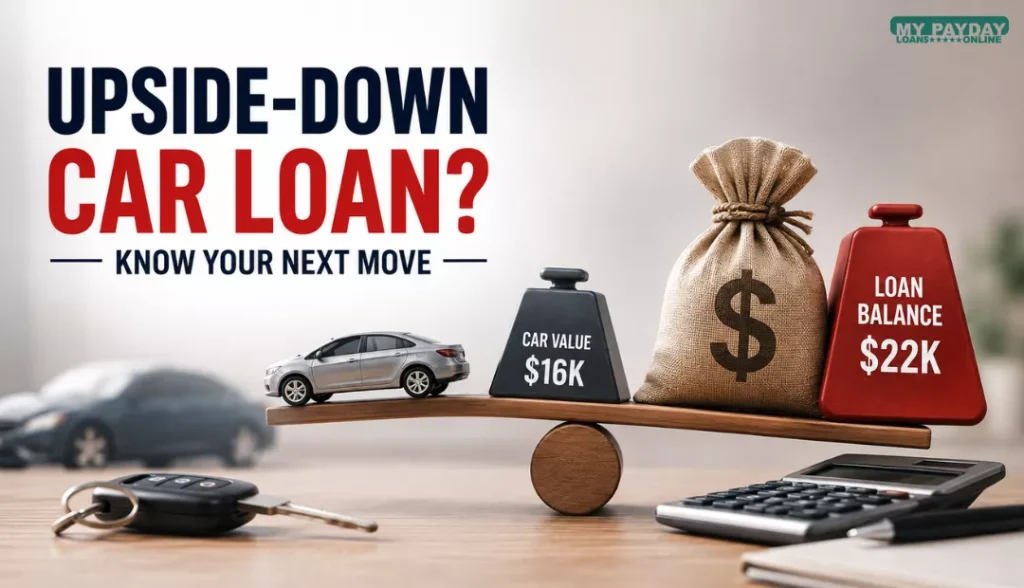
An upside-down car loan, also called negative equity, means you owe more on your car than it’s currently worth. In simple terms, your loan balance is higher than your car’s market value.
Formula: Loan balance > Car’s current market value.
How Does a Car Loan Become Upside-Down?
You still owe $22,000 on your car, but if you sold it today, it would only fetch $16,000. That leaves a $6,000 gap, which is your negative equity.
This situation doesn’t usually come from one bad decision. It builds gradually through a few very common patterns in car financing.
Rapid Depreciation
Today, cars depreciate quickly and especially in those first few years. The most significant drop-off tends to occur in the first one to three years. During this period your car’s resale value declines rapidly, and your loan balance doesn’t decrease at the same speed. Some cars — especially luxury models or trend-driven purchases — lose value even faster, blowing the gap even wider.
Long Loan Terms
Longer loan terms such as 72 or even 84 months are structured to help monthly payments feel affordable. The trade-off is less obvious. This is because, during the early phase of the loan tenure, a larger portion of your EMI goes toward interest and not reducing the principal. So even as you’re paying regularly, the actual value of the loan doesn’t quickly shrink, and your car loses value behind the scenes.
Low or No Down Payment
When you start with a low or little to nothing down payment, it results in owning a car without any real equity. That means from the moment you pull a car out of the showroom and its value starts to depreciate, you are already at risk of being in a position where you owe more than it’s worth.
Rolling Negative Equity Forward
This is where so many people inadvertently trap themselves. If you trade in a car that has negative equity, and put that balance due into a new loan, then you’re not resetting your finances; you’re knocking the debt forward. The bottom-heavy new loan makes it easier to get upside down again.
High Interest Rates
A higher interest rate holds you back, even if you’re making on-time payments. More of your payment will go toward interest, particularly in the beginning, so you’ll see less meaningful reduction in principal.
How to Get Out of Upside Down Car Loan
There’s no magic solution, but there are sure ways to improve your situation depending on where you’re at.
Strategy 1: Increase Your Principal Payments
The most potent way of doing this would be to pay more than your EMI comes and make sure the excess amount goes directly into principal repayment. Even a small increase each month can slowly close the gap faster than making minimum payments.
Strategy 2: Get a Shorter Repayment Term
If your financial profile improved a bit since you took the loan, refinancing can help. Switching to a short term loan option raises your monthly payment but reduces how quickly you are chipping away at the principal balance, that all counts when you want to close negative equity.
Strategy 3: Hang on to the Vehicle and Wait It Out
If your car is functional and your payments are not insane, keeping it for a while lets time smooth things over. Over the years, depreciation slows down and your loan balance slowly converges.
Strategy 4: Sell the Car Privately, Pay the Difference
Trading your car won’t normally net you a high price, but selling it directly to a buyer will. If you’re upside down though, you’ll have to make up the difference yourself in order to pay off the loan. This one works really well if you have some savings or a source of funds to fill that gap.
Strategy 5: Avoid Risky Short-Term Fixes
Some borrowers consider options like an online title loan service to quickly cover the negative equity gap, but this can backfire. Title loans often come with extremely high interest rates and short repayment periods, which can deepen your financial strain instead of resolving it. It’s generally safer to explore structured repayment or refinancing options rather than taking on additional high-risk debt.
Strategy 6: Getting GAP or GAP Insurance
GAP insurance is a buffer, not a cure. Regular insurance will pay you the current value of your car if it’s totaled, and GAP insurance pays the difference between that amount and what you have left on your loan. It only applies in situations of total loss, and has to already be in place before that happens.
Strategy 7: Voluntary Surrender (Your Absolute Last Resort)
If the pressure of paying for it becomes too much to bear, surrendering the car might feel like an escape. The truth is, there are grave consequences. The rest of the loan balance doesn’t just vanish, and your credit score gets slapped. You should only consider it after exploring all other options, including negotiating with your lender.
How To Avoid Upside-Down Auto Loans in Future
Avoiding this scenario isn’t about strict rules but it’s more about making informed decisions.
A sizable down payment provides immediate equity and a cushion against depreciation. Even if it means a slightly higher monthly payment, a shorter loan term helps you maintain the car’s value over time.
Also buying a used car shifts the equation in your favor, since steep depreciation already took place.
Meanwhile, knowing how various cars retain their value makes a surprising difference on long-term ownership costs.
The only bad habit one should avoid, never to load old debt onto a new loan. Though it may seem convenient, but say no to it, it’s one of the quickest ways to get locked into a cycle of negative equity.
Conclusion
Owning an upside down car loan is not uncommon. It’s a common consequence of the way cars lose value and how loans are structured. As you work, it doesn’t matter how many mistakes you’re making. It occurs when you owe more on your loan than what your car’s worth. This can be avoided completely post planning during the time of buying.