Your loan could be just a few steps away!
Bad Credit? We Could Help. Quick Approval Process
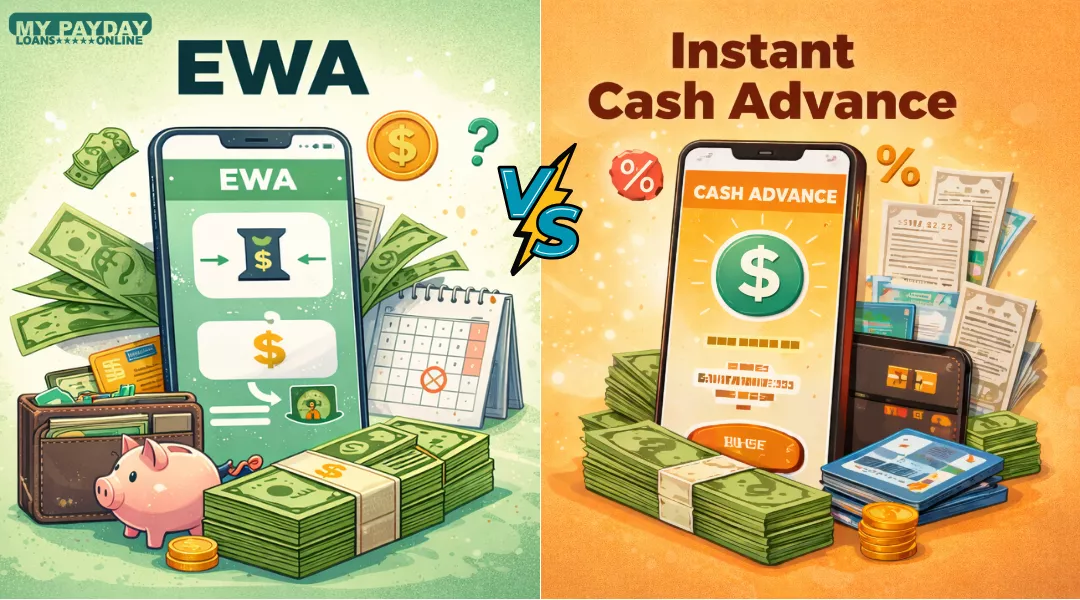
Earned wage access (EWA) lets employees access wages they’ve already earned before payday, typically through an employer. An instant cash advance is a short-term loan from a fintech app, available to anyone regardless of employment — but it often carries fees or optional tips. The key difference in earned wage access vs instant cash advances is that EWA is tied to hours worked, while a cash advance is generally tied to creditworthiness or spending behavior.
The majority of people utilize these services due to the same reason: cash flow gaps. Bills don’t always come due right on payday, and surprise expenses arise at the most inopportune times. The main difference between the two is simple but significant, even though both solutions provide quick access to funds.
One provides access to income you have already earned, the other allows for a loan against future income. This guide, payday loans vs. earned wage access, aims to inform employees, gig workers, HR teams, and everyday consumers on which option is more sensible.
What Is Earned Wage Access (EWA)?
Earned wage accessed also known as an on-demand payment, payout, or pay advance service. Workers get paid as they earn, rather than waiting for a traditional pay cycle.
This system usually functions via an employer partnership with a EWA provider. Since it’s linked to payroll, the system likely track hours worked and determine how much income available for early access. Once requested, the funds transferred within minutes or hours (depending on the provider).
Unlike typical borrowing, EWA doesn’t come with interest or long-term repayment. The recommended withdrawal amount automatically deducted from the employee’s subsequent paycheck. That structure is what prevents it from becoming a loan and keeping it more cash flow oriented.
How Does Earned Wage Access Work — Step By Step
- The employer can connect their payroll system to an EWA provider
- Employee works their assigned hours
- Fragment of earned wages are accessible in the app
- The employee requests a withdrawal
- The money directly deposited into their bank account or credit card.
- The amount automatically taken out on payday.
What Is an Instant Cash Advance?
Fintech apps provide instant cash advances with small-dollar, short-term amounts. And unlike EWA, it’s not tethered to an employer or hours worked. Instead, it’s determined by a factor that includes your financial behavior like your income activity and account history.
Typically to start using a service, users will link their bank account to an app. The platform then analyzes deposits, spending behavior and balances to assess eligibility. It then provides an advance based on that data, typically between $20 and $750.
Repayment typically occurs automatically when your next direct deposit comes in. Although many apps do not define this as “interest,” there is usually a fee, a subscription rate or an alleged optional tip. These costs can add up quickly, particularly over multiple uses.
How Do Instant Cash Advance Apps Work?
- Legit cash advance apps allow you to create an account.
- Connect your bank account to verify income
- The app looks through your transaction history
- You are provided an advance offer based on your eligibility
- Accept the offer and get paid, sometimes instantly
- Repayment deducted from your next deposit automatically
Earned Wage Access vs Payday Loans: Pros and Cons
EWA — Pros
- No interest or traditional debt trap
- Limited Access to already earned wages, helping to prevent overborrowing
- Frequently subsidized by employers, thus low cost or free
- May help cut down on payday loans
- Supports better day-to-day financial stability
EWA — Cons
- Possible only if your employer offers it
- Not available to freelancers or independent contractors
- A limit on withdrawals based on hours previously completed
- Frequent use may make future paychecks seem smaller
Cash Advance — Pros
- No employer involvement required
- Available to gig economy workers and freelancers
- Typically no hard credit check
- Useful for irregular income patterns
Cash Advance — Cons
- Fees, tips and subscriptions can add up fast
- Advance limits are relatively low
- Some features require paid memberships
- Repayment timing can cause overdrafts if not done carefully
Frequently Asked Questions
Is earned wage access the same as a payday loan?
No. Earned wage access lets employees tap into income they have already earned, generally interest free.
Do cash advance apps affect your credit?
Many cash advance apps do not conduct hard credit checks and don’t report to credit bureaus.
How much can you receive from earned wage access?
It varies based on the provider and employer policy. In most cases, employees can access between 50% and 100% of their earned but unpaid wages, often capped between $500 and $1,000 per pay period.
Bottom Line
The difference between earned wage access and instant cash advances is one concept. EWA enables you to get money for work you’ve already done, while a cash advance allows you to borrow against future paychecks.
That is what makes each option better for a different type of user. In the context of earned wage access vs instant cash advances, earned wage access best serves employees who are looking to smooth potential timing gaps in their pay cycle. Cash advance apps may seem easier to access because they typically target freelancers or people with cash-based jobs, but they can also carry a high risk of overuse.